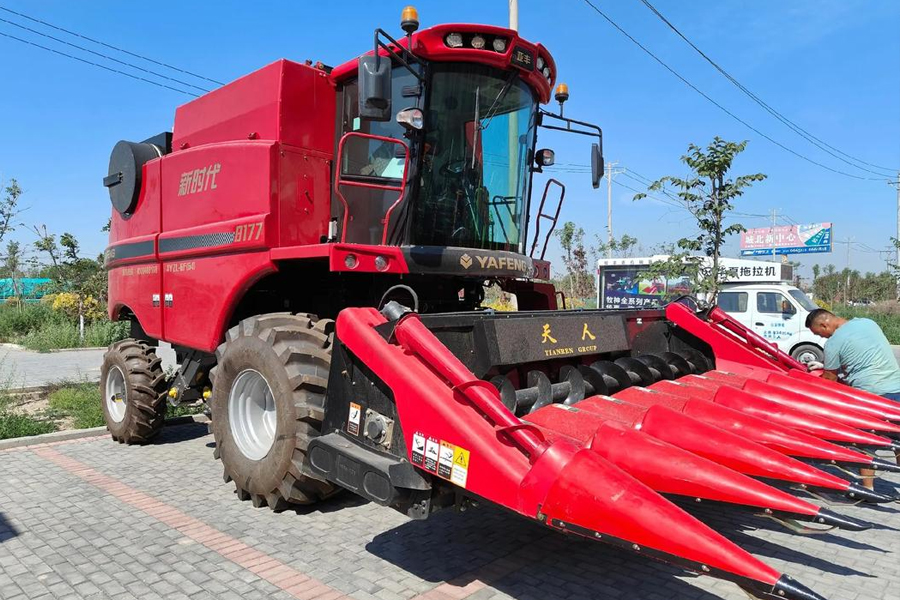
Agricultural harvesters are indispensable core equipment in agricultural production, mainly used for the mature harvesting of crops such as grains, fruits and vegetables, covering rice, wheat, corn and many other varieties, and running through the key stages of autumn and summer harvest. They are the “key force” for ensuring grain is fully collected and improving production efficiency. With the development of agricultural technology, harvesters have transformed from traditional models toward high-efficiency, intelligent and green designs, becoming good helpers for farmers in timely harvesting and ensuring abundant yields.
With the support of agricultural machinery subsidy policies, various harvesters are widely used in fields. In plain areas, large combine harvesters realize integrated operations of cutting, threshing and cleaning, greatly shortening the rush-harvest period; in hilly and mountainous areas, small and lightweight harvesters flexibly adapt to plots, solving the difficulty of harvesting on slopes and effectively reducing grain loss.
Today, intelligent technology is gradually being integrated into harvesters, with Beidou navigation, automatic obstacle avoidance and other functions realizing precise harvesting and reducing labor input. At the same time, new-energy harvesters are being gradually promoted, being low-carbon, environmentally friendly and energy-efficient. The popularization of harvesters not only reduces farmers’ labor intensity, but also safeguards the “last mile” of grain harvesting, providing strong support for large-scale and modern agricultural development and rural revitalization.