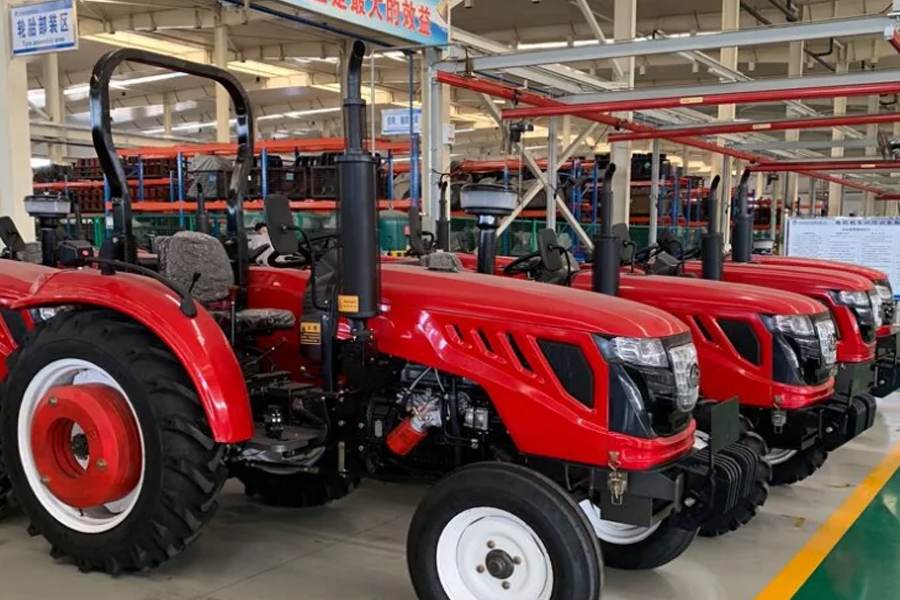
Agricultural tractors, as the “main force” of agricultural production, run through the entire process of plowing, sowing, fertilizing and harvesting, and are core equipment for promoting agricultural mechanization and large-scale development. Today, with the iterative upgrading of agricultural technology, traditional tractors are gradually transforming toward intelligence and multi-functionality, becoming good helpers for farmers to increase yield and income.
Benefiting from the continuous support of agricultural machinery subsidy policies, various tractors adapted to different plots are widely entering fields. In plain areas, high-horsepower tractors paired with supporting implements realize integrated plowing and sowing operations, greatly improving production efficiency; in hilly and mountainous areas, small and lightweight tractors shuttle flexibly, solving the problems of narrow plots and inconvenient operation.
The integration of intelligent technology gives tractors more of a “sense of technology”, with the application of Beidou navigation, automatic driving and other functions realizing precise operation and reducing labor input and resource waste. At the same time, new-energy tractors are being gradually promoted, and their low-carbon and environmentally friendly features meet the needs of green agricultural development. The popularization and application of agricultural tractors not only reduces farmers’ labor intensity, but also promotes the transformation of agricultural production from “labor-intensive” to “mechanized”, injecting strong momentum into rural revitalization and agricultural modernization.