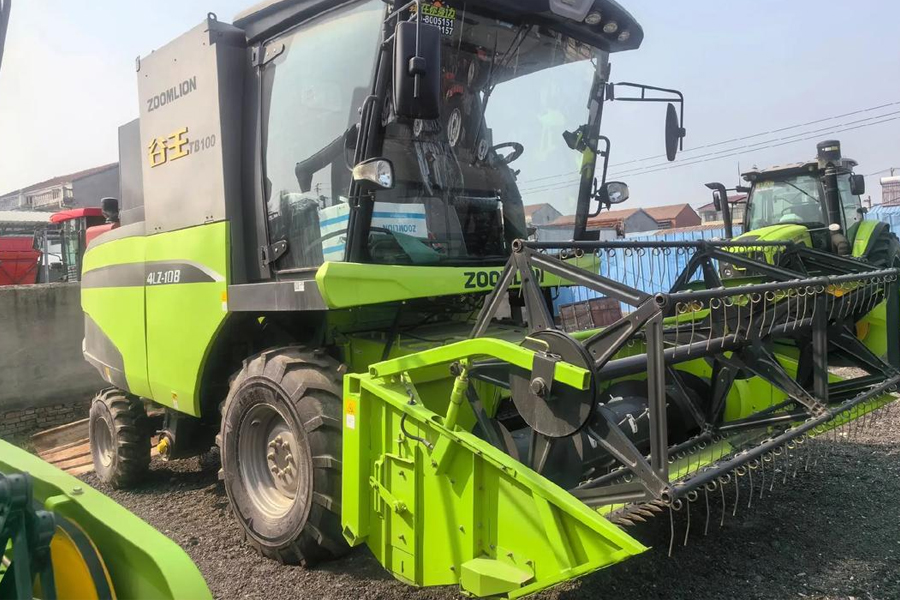
In the golden autumn season, rice fragrance spreads across the land, and various regions enter the critical period of autumn harvest. In the fields, all kinds of grain harvesters shuttle back and forth, completing cutting, conveying, threshing and cleaning in one go, turning golden ears of rice into full grains, as the roar of machinery plays the symphony of a bumper harvest. Today, with the implementation of the agricultural machinery scrapping and renewal subsidy policy and continuous technological innovation, grain harvesters have not only made the leap from “manual” to “mechanical”, but also upgraded toward “intelligent” and “green”, becoming a core force in ensuring grain is fully collected and promoting modern agricultural development.
To accelerate the structural adjustment of agricultural machinery and improve the mechanization level of autumn harvest, since 2025, multiple national departments have jointly introduced the agricultural machinery scrapping and renewal subsidy policy, bringing combine harvesters (including machinery for combined harvesting of crops such as grain, cotton, oil and sugar) into the subsidy scope, and further expanding subsidized categories and raising subsidy standards to provide strong support for farmers to upgrade their grain harvesters. It is reported that the policy clearly raises the scrapping subsidy standard by 50% for scrapping and renewing agricultural Beidou assisted driving systems and other related equipment, and various regions have also optimized subsidy procedures based on local conditions and used ultra-long-term special treasury bond funds to speed up subsidy payments, allowing farmers to truly enjoy the policy benefits [1]. Taking Guangdong Province as an example, on the basis of the national policy, it has further expanded the scope of subsidized machinery and refined the subsidy standards for models such as grain harvesters, with the maximum subsidy for a single self-propelled full-feed rice and wheat combine harvester reaching 16,500 yuan, effectively reducing the cost for farmers to purchase and renew grain harvesters [4].
With policy support, various new grain harvesters are accelerating into the fields, with intelligence, miniaturization and green development becoming new trends. In Hongba Village, Mingda Town, Liangping District, Chongqing, the first locally introduced driverless grain harvester became a highlight of the autumn harvest. Farmers only need to set the operation range and trajectory through a mobile app, and the equipment, powered by the Beidou navigation system, can automatically complete walking, harvesting and threshing, without manual control throughout the process [2]. According to the local cooperative leader, the driverless harvester can harvest about 60 mu per day at full capacity, with efficiency more than 30% higher than traditional manual operation, and it does not crush seedlings, miss cutting or spill grain when turning. One person can control 5 machines at the same time, greatly saving labor costs.